
How long does a mattress last and when should you replace it?
Your mattress still looks perfectly fine, so it'll last a while longer. Right? Not necessarily. The wear that ruins your sleep is on the inside, not the outside.
In this article you'll learn how long a mattress lasts on average, how that differs per type, which signs show your mattress is due for replacement, and how to stretch its lifespan as far as possible.
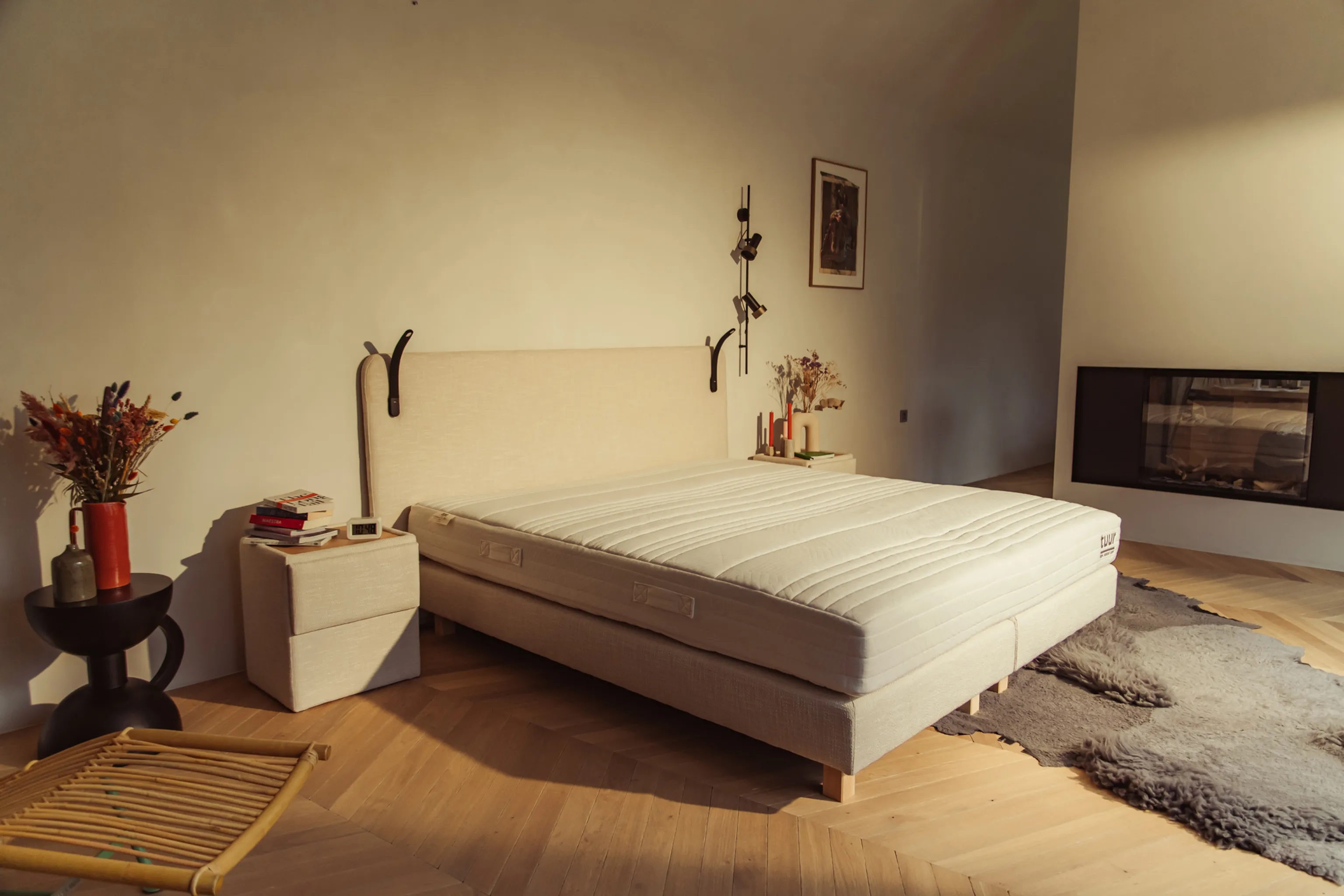
How long does a mattress last?
A mattress lasts eight to ten years on average. That's a guideline, not a rule: how long your mattress actually lasts depends on the material, your weight, how much you perspire, and how well you maintain it.
Why a mattress needs replacing over time has little to do with its appearance and everything to do with what you can't see. After years of use the material loses its resilience and sinks in, reducing support. At the same time, over those years your mattress has absorbed hundreds of litres of perspiration and become a gathering place for dust mites. So both support and hygiene decline, even if the outside still looks fine.
How long does a mattress last per type?
The material makes the biggest difference. Here's the average lifespan per mattress type:
| Mattress type | Average lifespan |
|---|---|
| Polyether (foam) | 4 to 6 years |
| Cold foam | 7 to 10 years |
| Pocket springs | 8 to 10 years |
| Memory foam | 8 to 10 years |
| Natural latex | 10 to 15 years |
Natural latex lasts longest. That's due to its resilience: while foam sinks in over time and loses its support, natural latex holds its shape and support for much longer. A quality natural latex mattress earns back its higher price over the years, and produces less waste since you need to replace it less often. You can read more about that in our article on sustainable sleeping.
Is your mattress due for replacement? The signs
The exact number of years matters less than how your mattress performs right now. You're the best judge. If you recognise this, replacement is probably in order:
Physically:
- You wake up more often with back pain, a stiff neck, or aching joints.
- You sleep more restlessly and wake up more often at night.
- You don't feel rested in the morning, even if you were in bed long enough.
- You notice you sleep noticeably better in a guest bed or hotel than at home.
On the mattress:
- There's a visible dip or dent where you sleep.
- The edges are sagging or the mattress is visibly deformed.
- You hear noise or feel the springs (for a sprung mattress).
- There are stains, or it smells musty despite airing.
If you mainly notice physical complaints, also read where back pain after sleeping comes from, since the cause and the solution are connected.
Should you replace the base or just the mattress?
With a box spring bed, you don't always need to replace the whole bed. Often only the mattress is worn while the base underneath is still fine.
- Replace only the mattress if the base (the sprung frame) is still firm and level and the mattress shows visible wear or dipping. This is the most common case.
- Replace the base too if it sags, creaks, or is visibly sunken. A worn base undermines even a new mattress.
- Pay attention to size and type. A replacement mattress for a box spring bed needs to match the base in size and firmness. If in doubt, measure the existing size and choose the same dimensions.
A middle ground: if your mattress itself is still fine but just lacks a bit of comfort, a topper can help. However, a topper doesn't replace a worn mattress; if there's dipping or sagging, a new mattress is the only real solution.
How do you extend the lifespan of your mattress?
With good care you can get years of extra life out of your mattress. The most important habits:
- Turn and flip your mattress regularly, ideally every three months (unless the manufacturer states otherwise). This spreads out the wear evenly.
- Use a mattress protector. It catches perspiration and dirt and keeps your mattress more hygienic for longer.
- Air your mattress regularly. Fold back the bedding in the morning and air your bedroom, so moisture can escape.
- Make sure you have a good, ventilating base. A slatted base lets air circulate and prevents moisture buildup from below.
- Choose quality and natural materials when buying. They simply last longer.
What should you look for in a new mattress?
If you're due for a replacement, don't gamble on it again. What matters:
- Tailored support. A good mattress keeps your spine in a straight line: your shoulders and hips sink in, your waist and lower back are supported. The right firmness depends on your weight and sleeping position.
- Material and lifespan. Weigh the purchase price against how long the mattress lasts. Natural latex costs more, but also lasts the longest.
- Temperature regulation. A breathable, moisture-regulating mattress stays more hygienic and sleeps cooler.
- A trial period. You only feel after a few weeks whether a mattress truly suits you. A generous trial period, such as 120 nights, gives you that certainty.
If you're not sure which mattress suits you, the mattress test can guide you through a few questions. Or browse the mattress overview directly.
Frequently asked questions about the lifespan of mattresses
A topper lasts shorter than a mattress, on average two to five years depending on the material. It doesn't replace a worn mattress; for that you need a new mattress.
On average eight to ten years, depending on the material, your weight, and maintenance. Natural latex lasts longest at ten to fifteen years, cheap foam (polyether) shortest at four to six years.
Natural latex. Thanks to its resilience it keeps its shape and support longer than foam, with an average lifespan of ten to fifteen years.
Yes. Turn and flip your mattress every three months, use a mattress protector, air the mattress and the room regularly, and make sure you have a ventilating base. That can get you years of extra use.
Roughly every eight to ten years. With good care, such as turning it regularly, using a mattress protector, and airing it, and with a natural latex mattress, you can stretch that period.
By physical signs (waking up more often with back pain, not feeling rested, sleeping better in another bed) and by the mattress itself (dipping, sagging edges, stains, or a musty smell despite airing).
As a guideline after eight to ten years, but the signs matter more than the calendar. If you wake up with back pain, sleep restlessly, or see dipping, replacement is due sooner.
Usually just the mattress, if the base underneath is still firm and level. If the base sags, creaks, or is visibly sunken, replace that too, since it will undermine your new mattress otherwise.